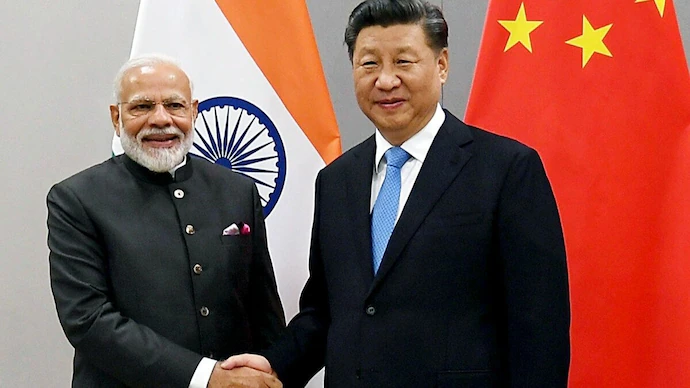

The contemporary global trade environment is defined not by stability but by aggressive, unilateral protectionism from a major economic power, the United States. This policy, centered on tariffs, has created a ripple effect, forcing other nations to re-evaluate long-standing geopolitical and economic alignments. The analysis herein focuses on one of the most significant second-order effects: the pragmatic rapprochement between India and China. Despite persistent border tensions, the recent meeting between Prime Minister Narendra Modi and President Xi Jinping marks a strategic pivot for both nations. This shift is driven by a mutual need to hedge against U.S. economic volatility and the perceived weaponization of trade policy. The realignment is not an ideological one, but rather a transactional and necessary response, creating new trade dynamics and supply chain opportunities that will fundamentally reshape global logistics for the export-import (EXIM) industry.
From Border Tensions to Economic Pragmatism: The Modi-Xi Meeting
The bilateral meeting between Prime Minister Modi and President Xi Jinping in Tianjin, on the sidelines of the Shanghai Cooperation Organisation (SCO) summit, yielded a significant rhetorical and strategic shift. A core outcome was the explicit agreement that India and China are “development partners, not rivals,” and that their differences “should not be allowed to turn into disputes”. This statement represents a notable diplomatic concession, particularly from India, which has historically maintained a more guarded stance. The leaders also acknowledged a “deficit in how the WTO and the UN are working,” indicating a shared frustration with the U.S.-led global economic order and a desire for institutional reform that better serves their collective interests.
Beyond the symbolic gestures, the meeting produced specific economic agreements designed to foster greater cooperation. Both leaders committed to facilitating trade and investment, reducing risks, and working toward a more balanced bilateral trade relationship, a direct effort to address India’s persistent trade deficit with China. Discussions also included the resumption of direct flights and visa facilitation to strengthen people-to-people ties, building on existing cultural exchanges. On the sensitive issue of border disputes, the leaders noted “satisfaction” with the successful disengagement of forces and the “maintenance of peace and tranquility”. This progress, while not a final resolution, is critical to ensuring the stability required for continued bilateral economic ties.
The rapprochement between India and China is an undeniable and direct consequence of U.S. protectionist policies. The Trump administration’s decision to impose a punitive 50% tariff on Indian goods—a measure implemented on top of an existing 25% duty—was explicitly linked to India’s continued purchases of Russian oil. This action was perceived by New Delhi as a direct challenge to its foreign policy principle of “strategic autonomy,” the idea that India’s relationships should not be viewed through the “lens of a third country”.
Simultaneously, China has been under immense tariff pressure from the U.S. for years, with a baseline tariff on Chinese imports rising to as high as 145%. Facing a shared external threat, both nations found a powerful common interest in economic collaboration and de-risking from the volatility of U.S. trade policy. The Modi-Xi meeting, which solidified the narrative of “partners, not rivals,” is a direct, tangible outcome of this shared strategic pressure. It is a clear example of how an aggressive policy by one nation can inadvertently push its targets into an unexpected alliance, creating a new geopolitical reality.
India’s Strategic Pivot: Hedging Against Western Volatility
In response to the U.S. tariffs, India has launched a multi-pronged strategy to safeguard its economy and assert its strategic autonomy. The government has focused on providing immediate financial relief to exporters, easing special economic zone (SEZ) norms to ensure liquidity, and helping to maintain order levels and employment in vulnerable sectors.
Beyond short-term measures, India is actively pursuing supply chain diversification. The government has initiated targeted outreach programs in 40 key markets, including the UK, Japan, and South Korea, with a specific focus on boosting textile exports. This move is a direct response to the 50% U.S. tariff, which has put Indian textile exporters at a 30-31% price disadvantage compared to competitors in Vietnam, Bangladesh, and Sri Lanka.
Another critical component of India’s long-term strategy is a focus on domestic reforms. The government is operationalizing e-commerce export hubs with simplified logistics and is considering non-financial support measures to reduce compliance and logistics costs for small and medium-sized enterprises (MSMEs). The Production-Linked Incentive (PLI) schemes are also a key part of this strategy, aiming to localize production in critical sectors like semiconductors and solar PV modules, where India remains heavily reliant on Chinese imports.
This recalibration represents a two-way street for supply chain dynamics. The punitive U.S. tariffs on Indian goods create a powerful “push” factor, compelling Indian exporters to seek out new markets and partners. At the same time, China’s offer of improved market access for Indian goods, which includes easing export restrictions on items like fertilizers and rare earth magnets, creates a significant “pull” factor. This “push-pull” dynamic changes India’s position in the global supply chain. Instead of solely seeking to be an “alternative” manufacturing hub to China for the U.S. market, India is now positioning itself as a key node in an emerging pan-Asian supply chain that is less dependent on Western markets. This fundamental shift will reshape the competitive landscape for logistics providers, requiring them to re-evaluate traditional trade lanes and identify new opportunities in intra-Asia freight flows.
The Supply Chain Fallout: Opportunities and Risks for the EXIM Industry
The immediate impact of the tariffs is most acutely felt in labor-intensive sectors. The punitive duties affect approximately 66% of India’s exports to the U.S., which amounts to about $60.2 billion worth of goods, including textiles, gems and jewelry, shrimp, and furniture. Experts predict a possible 70% reduction in export volumes in these sectors due to the severe price disadvantage. This development puts competitors like China, Vietnam, and Bangladesh in a prime position to capture market share that India loses.
Meanwhile, India’s reliance on Chinese imports for critical components remains a significant factor. Approximately 70% of India’s solar equipment and over 75% of its demand for lithium-ion batteries and rare earth magnets are met by Chinese suppliers. While India’s PLI schemes aim to localize production, current supply chain bottlenecks and the high cost of domestic alternatives mean that a rapid shift away from Chinese inputs is not yet feasible.
For the logistics industry, this geopolitical and economic realignment carries clear implications. The traditional U.S.-India trade lane for goods like apparel and gems is expected to experience a significant decrease in volume. This creates a risk for logistics providers whose operations are heavily dependent on this specific route. However, the new India-China rapprochement, coupled with India’s efforts to diversify its export markets, is poised to increase intra-Asia trade flows. This presents a major opportunity for logistics companies to reconfigure their services and capitalize on growing freight volumes between India, China, and other Asian hubs identified by the Indian government. The focus on e-commerce export hubs also signals a shift toward smaller, more frequent shipments, which requires logistics providers to adapt their operational models to handle new requirements for simplified customs and logistics.
Strategic Outlook for P&M Liner and Logistics
To navigate this evolving landscape, P&M Liner and Logistics should adopt a proactive and strategic approach. It is essential to diversify the service portfolio by engaging with clients in affected sectors to help them explore new trade lanes and reconfigure their supply chains. Offering consulting services on risk mitigation and market access can transform the company from a mere service provider into a strategic partner for clients.
A critical area for investment is enhancing intra-Asia capabilities. By strengthening partnerships and operational networks in key markets identified by the Indian government, such as the UK, Japan, and South Korea, P&M can position itself to capture the new trade volumes resulting from India’s diversification efforts.
Finally, the Indian government’s focus on e-commerce export hubs points to a significant growth area. Developing or enhancing specialized services for small and medium-sized enterprises (MSMEs) to help them with simplified logistics, compliance, and customs clearance will be crucial for capturing this burgeoning market segment.
Conclusion: A Pragmatic Partnership for a Volatile Future
The India-China rapprochement is a clear and direct consequence of U.S. tariff policy, demonstrating that unilateral protectionism can push nations into unexpected partnerships. For global logistics, this means a fundamental recalibration of trade routes and a shift in demand from West-to-East to intra-Asia flows. P&M Liner and Logistics must recognize this new “Asian Dynamic” to remain competitive and provide strategic value to its clients by anticipating and adapting to the new realities of global trade.

Leave a Reply